
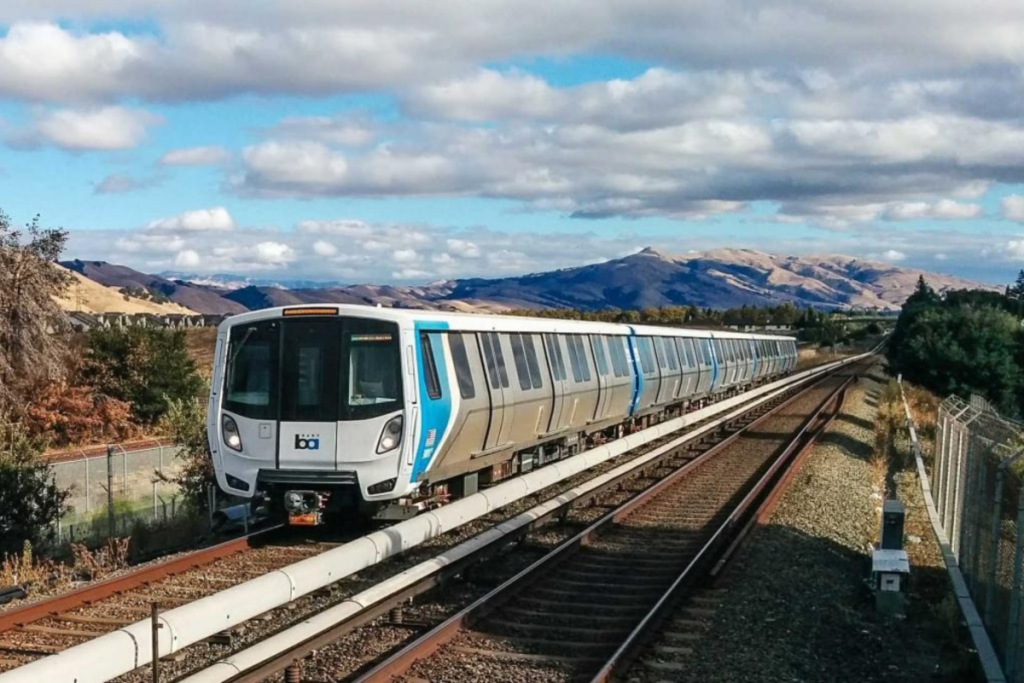

If you find yourself aboard a BART train tomorrow morning, Thursday, October 15, at 10:15 a.m… congratulations, you are now part of the International Great ShakeOut Day!
BART will join the annual earthquake drill event by triggering its ShakeAlert early warning system, causing all trains to slow down to 27 mph and come to a “very brief stop” before continuing on their journeys. Passengers will also hear a public announcement advising riders about the importance of earthquake preparedness.
Internally, BART will also use ShakeOut Day to test its employee communications, review earthquake alarms and train control systems from the Operations Control Center, and complete simulated damage inspections, according to the announcement.
International ShakeOut Day is a global earthquake drill held every year on the third Thursday of October. Millions of participants all over the world use the opportunity to practice earthquake preparedness, to the familiar mantra of “drop, cover, and hold on.” You can learn more and plan your own drill at ShakeOut.org.
What happens on BART during a real earthquake?
BART was an early adopter of the ShakeAlert early warning earthquake system, which connects to a statewide network of USGS seismic sensors. When a seismic threshold is reached, the system sends an automatic speed-restriction command, giving the trains time to slow down before the shaking arrives if the quake is far enough away.
In a real earthquake, the BART trains are held in place, except in the Transbay Tube and the Berkeley Hills Tunnel. Once it’s safe, the trains move to the nearest station to offboard riders.
Riders should sit down or grab a handhold, and then follow the instructions of BART personnel, who are trained to follow an established emergency plan. If you are in a station, you should stay back from the trackway edge; and if you are in a station concourse, you should not go down to the platform.
You can visit BART.gov to learn more about the system’s Earthquake Safety Program.