

The California High-Speed Rail Authority (CHSRA) is running heavy construction along the future bullet train’s Initial Operating Segment (IOS) in the Central Valley, in anticipation of getting high-speed track in the ground later in 2026.
While crews have been working on the IOS for over a decade now, we’re coming up on a milestone this year with the transition from civil construction to active track-laying and systems installation.
If all goes to schedule, this Central Valley segment may start serving passengers in 2032, according to The Associated Press.
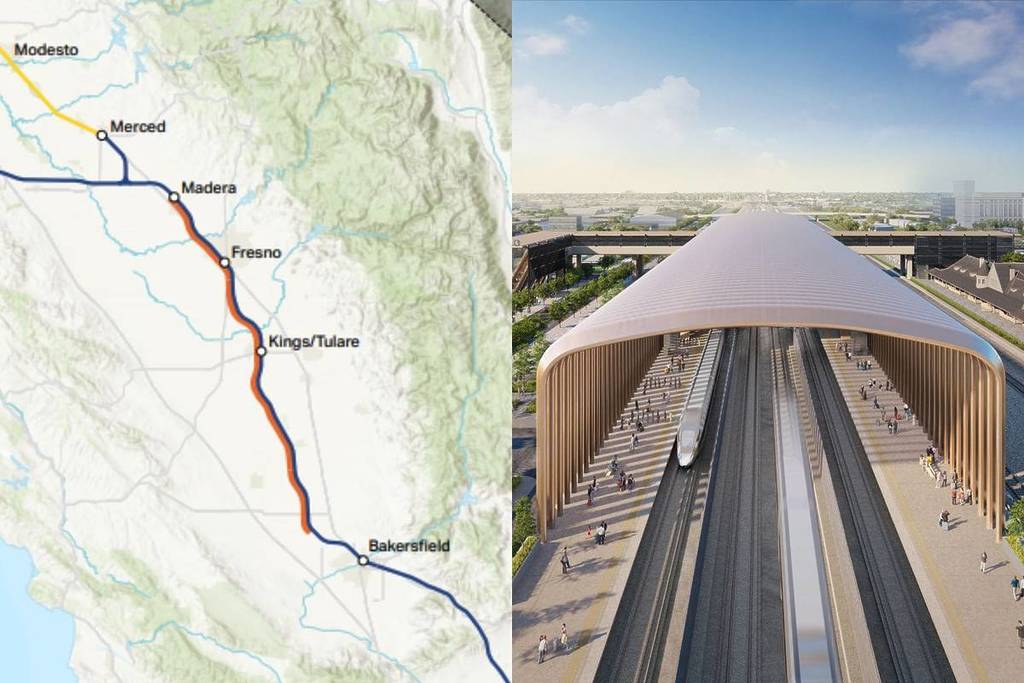
Central Valley route map
The Initial Operating Segment (IOS) is the 171-mile route segment in California’s Central Valley, stretching from Merced in the north to Bakersfield in the south. 119 miles are currently under active construction.
The CHSRA is eyeing a 2032 opening date for this segment of the route, with stops in Merced, Madera, Fresno, Kings/Tulare, and Bakersfield.
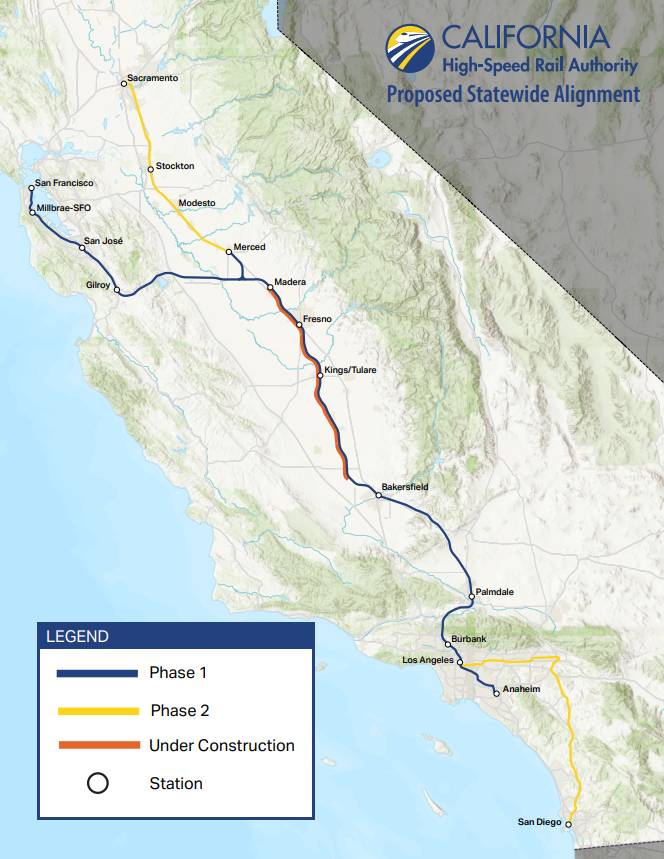
The full route will ultimately connect San Francisco and Los Angeles in just 2 hours and 40 minutes, and there are more ambitious plans to extend it even further to Sacramento and San Diego.
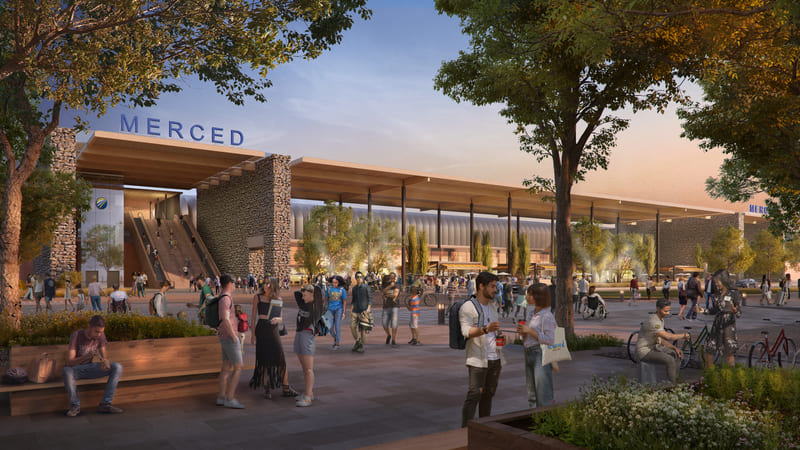
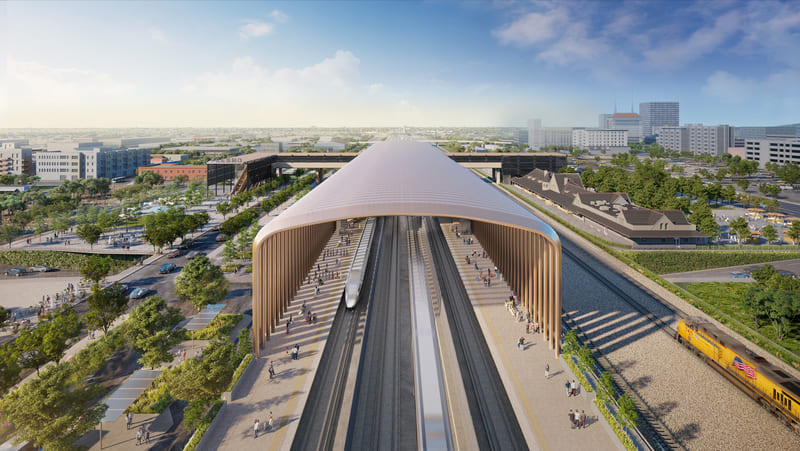
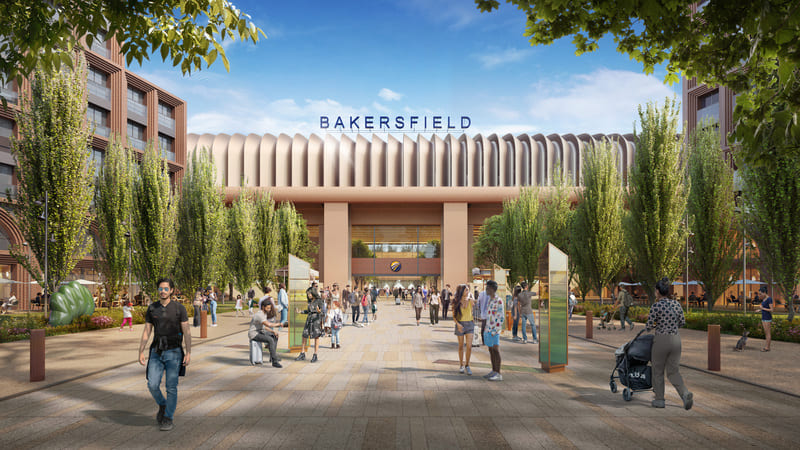
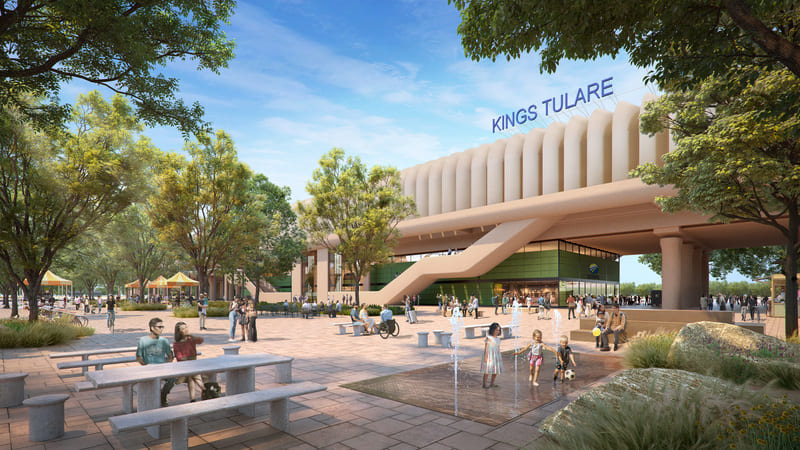
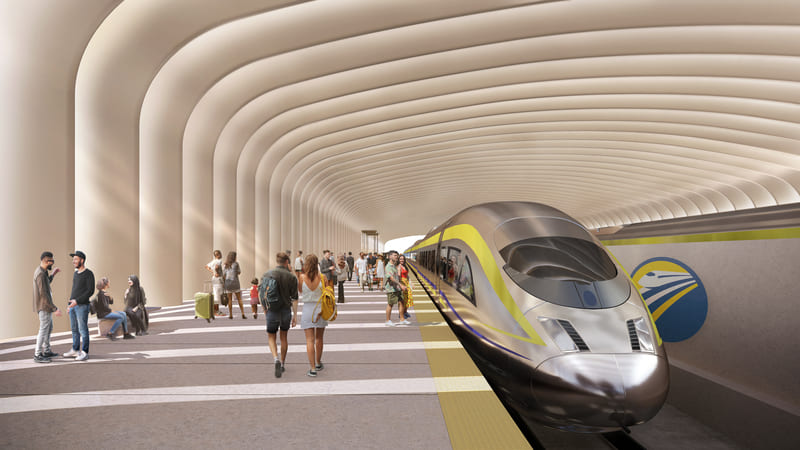
Central Valley station renderings
CAHSR selected San Francisco architecture firm Foster + Partners and British engineering company Arup to design 4 of the 5 Central Valley stations.
Current concept designs and renderings incorporate soaring canopies, large open concourses, and wood and stone walls to create a unifying visual identity across the stations.
The Madera station will be led by the San Joaquin Joint Powers Authority, which plans to relocate the Madera San Joaquins Amtrak station.
The San Francisco connection
San Francisco’s Salesforce Transit Center opened in 2018 as a northern terminus for California High-Speed Rail. With some calling it the “Grand Central of the West,” the stunningly futuristic transport hub hides an empty, two-story rail station that won’t be seeing trains for quite some time.
Firstly, CHSRA needs to complete work on The Portal, a 1.3-mile tunnel that will link Caltrain’s current terminal at 4th & King to the Salesforce Transit Center. Construction is expected to begin in 2028-29, and the tunnel should be ready for service in 2035, at least for the recently electrified Caltrain.
However, due to current funding and planning delays, there’s still no firm projected opening date for the full San Francisco-to-Los Angeles route.