
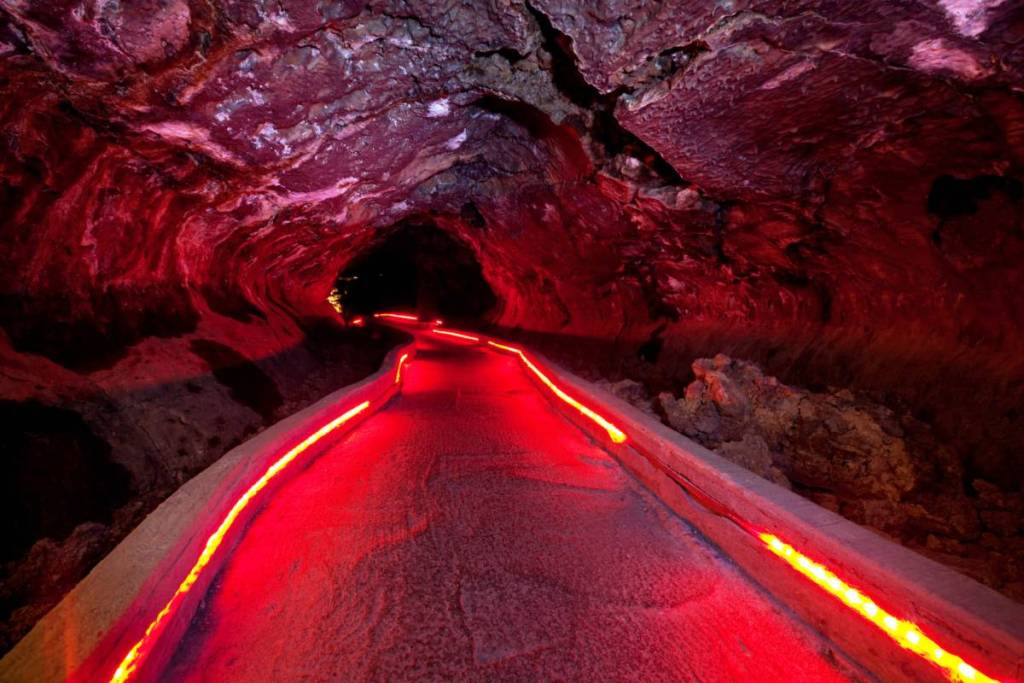

Lava Beds National Monument is a remarkable landscape covering 46,000 acres in Northern California. It features an intricate network of more than 800 caves formed by ancient volcanic activity, plus compelling traces of Native American history and battle sites from the Modoc War.
Would you take a road trip up to Tulelake to experience Lava Beds firsthand? Read on for a few tips to help you get the most out of this incredible national park.
Volcanic caves, Native American rock art, and high desert wilderness
Roughly two dozen caves at Lava Beds National Monument are open to visitors, with a range of difficulty levels and experiences. Before entering any cave, you’ll need to pick up a free caving permit from the Visitor Center.
- Mushpot Cave: At 770 feet long, this is the only lit cave in the monument, making it one of the easiest to explore.
- Valentine Cave: Found on Valentine’s Day in 1933, this striking 1,653-foot cave is also considered beginner-friendly.
- Skull Cave: For those who prefer less confined spaces, Skull Cave offers a more open environment and is generally less challenging.
- Catacombs Cave: This intricate, maze-like cave involves tight passages and requires specialized gear. It’s also among the monument’s most popular spots.
Beyond its geological features, Lava Beds is deeply tied to Native American history, especially that of the Modoc people. From the ancient petroglyphs at Petroglyph Point to Captain Jack’s Stronghold from the Modoc War, there are many places where visitors can connect with the legacy of California’s earliest civilizations.
Visiting Lava Beds National Monument
The lava tubes maintain a consistent temperature of around 55°F year-round, so visiting in winter is just as viable as in the summer. Just make sure you dress accordingly.
All visitors should wear long pants, long sleeves, and closed-toe shoes or boots. Carrying a flashlight is required (you can borrow one at the Visitor Center), and helmets are strongly recommended.
🌐 Learn more: National Park Service