
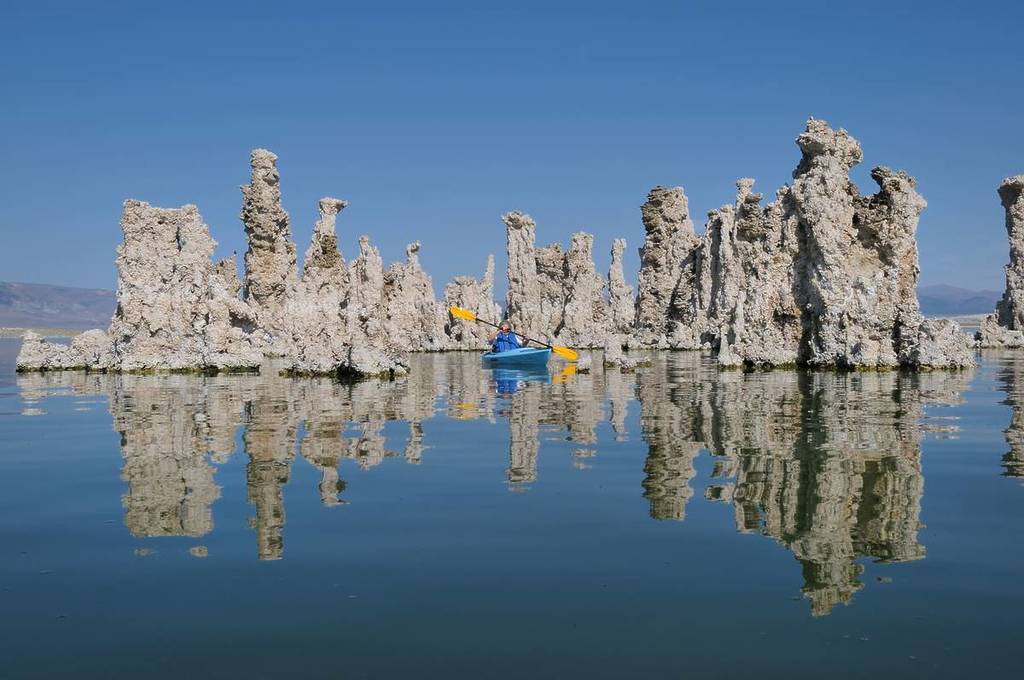

California’s Mono Lake has been around for 760,000 years, occupying an ancient basin that began forming 2.5 million years ago.
The saline lake is sometimes called “California’s Dead Sea,” as its high salt content makes for unusual buoyancy and other fascinating phenomena.
Here’s a closer look at this prehistoric lake located east of Yosemite and south of Lake Tahoe…
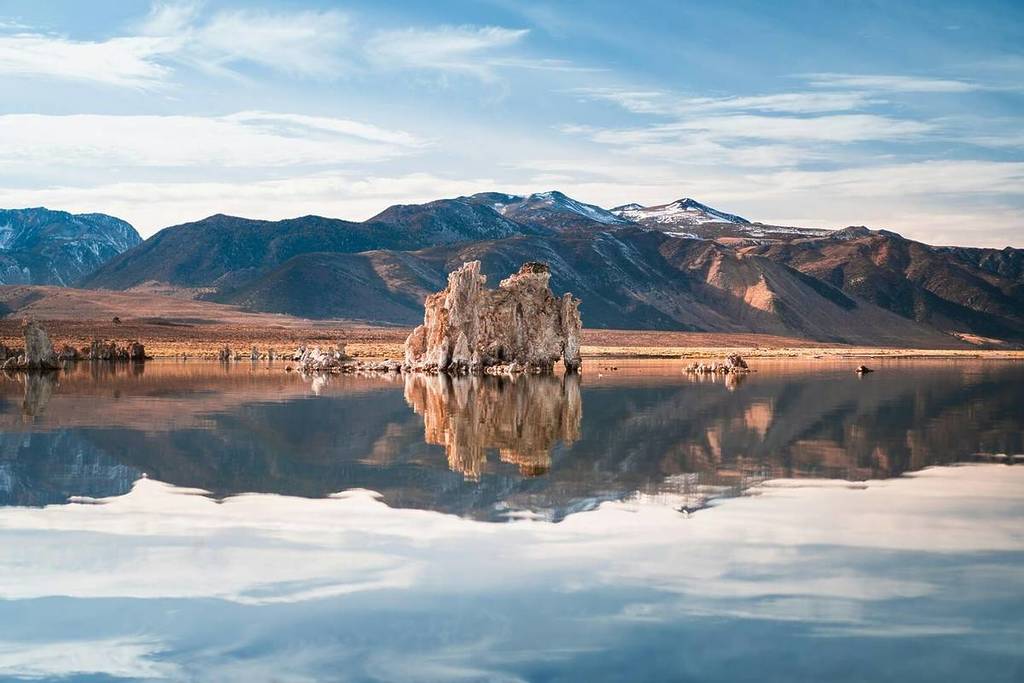
Tufa towers and saline water
Mono Lake is situated in an endorheic basin between volcanic craters and ancient islands, meaning that it has no natural outlet. All incoming water either evaporates or seeps back into the ground, resulting in high salt and mineral concentrations over time.
With a pH near 10, only specialized life forms can survive in Mono Lake, such as brine shrimp and alkali flies. In turn, these tiny creatures feed two million migratory and nesting birds throughout the area.
The lake is famous for its 30-foot tufa towers, which are limestone deposits that emerge out of the glassy surface. The towers form when calcium-rich underwater springs interact with the lake’s alkaline water, producing calcium carbonate that builds up over centuries.
When the city of Los Angeles connected their 300-mile aqueduct to the Mono Lake Basin in 1941, it caused Mono Lake’s water level to drop about 45 feet, exposing the tufa towers. As a result, the towers began to erode, but subsequent conservation efforts have preserved both the towers and the bird habitat.
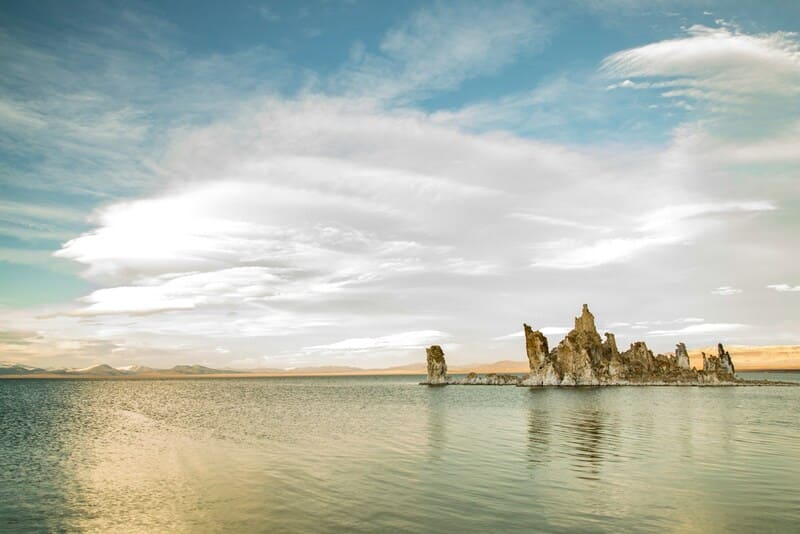
Visiting Mono Lake
The best way to see Mono Lake’s tufa towers is in the South Tufa Area, which has boardwalks and trails that take you up close to the remarkable formations. The flat, one-mile trail is self-guided, but you can also take a guided walk with a naturalist to learn more about the lake’s unique geology.
Swimming in Mono Lake is allowed, and many visitors are drawn to the lake for an unusually buoyant sensation reminiscent of the Dead Sea. The water is almost three times saltier than the ocean, making floating effortless. The most popular entry point is Navy Beach on the south side.