
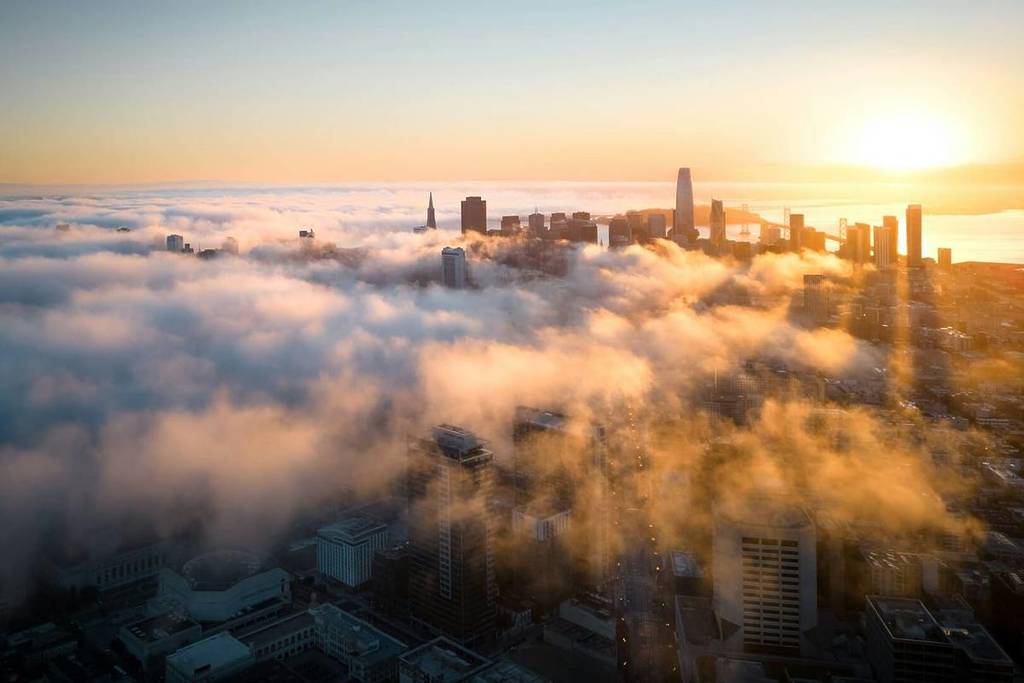

Ahh, finally some good news! San Francisco just topped a new study about air quality trends in cities worldwide.
Breathe Cities analyzed air quality data from cities around the globe, ultimately identifying 19 cities that achieved “remarkable reductions” in air pollution over the last 15 years. While the majority of the list highlighted cities in Central East Asia and Europe, San Francisco is the only North American city to appear in the top-achieving cities.
“Remarkable reductions” were defined as a reduction of at least 20% in both fine particulate matter (PM2.5) and nitrogen dioxide.
PM2.5 is a mixture of microscopic solid particles in the air, which are produced by combustion, vehicles, and industry, and can cause cardiovascular diseases. Nitrogen dioxide (NO2) is a pungent gas formed from fossil fuel combustion which can cause respiratory issues and acid rain.
Air quality progress in San Francisco
From 2010 to 2024, San Francisco was found to have reduced both PM2.5 and NO2 by just over 20%. The study outlined several SF city initiatives that correlate with these reductions.
Firstly, Breathe Cities highlighted SF’s work with the Bay Area Quality Management District to create a Citywide Air Quality Health Risk Assessment that is publicly available online. The risk assessment provides a view of the city’s “air pollutant exposure zone,” allowing residents to inform themselves about air pollution and health risks in their neighborhoods.
The study also delved into SF’s parking reforms, such as the 2019 elimination of parking minimums, which required businesses to provide a minimum number of parking spaces. Additionally, Breathe Cities lauded SF’s mandate to install EV charging infrastructure in all new developments and major renovations, which goes hand-in-hand with financial incentives of up to $120K for the installation.
Reducing air pollution around the world
Nearly half of the cities found to achieve the biggest air pollution reductions were in Central and East Asia—which, the study asserts, proves how rapid improvement can also be achieved in fast-growing and densely populated areas.
The most dramatic reductions in PM2.5 were recorded in Beijing, which decreased 48%, and Warsaw, which decreased 46%.
The biggest NO2 reductions were achieved in the Netherlands, with Amsterdam reducing by 44% and Rotterdam by 43%.