
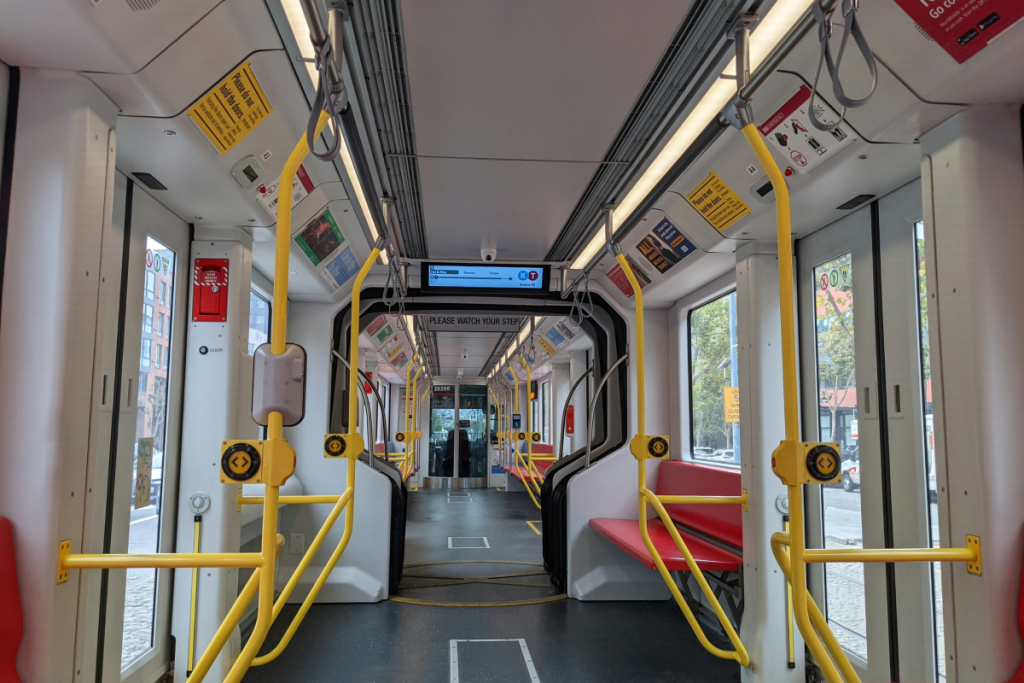

During the pandemic, Muni Ridership understandably decreased drastically as people social distanced and worked from home. Since the end of the pandemic, the transit system’s ridership numbers have been slow to recover, causing one of Muni’s funding sources to significantly decrease. However, the recovery has hit a promising milestone this September, with Muni reporting a post-pandemic record.
Muni ridership record
The SFMTA reported that Muni hit 555,000 average daily weekday riders and a total of 15 million trips in September. This is 84% of Muni’s pre-pandemic ridership. While it’s still lower than pre-pandemic numbers, it’s still a notable increase.
The report also revealed that weekend ridership was particularly high, with 373,000 average daily weekend boardings, translating to 99% of pre-pandemic weekend ridership. Additionally, every rail line had an increase in ridership from last year. The T line even saw a 20% increase compared to September 2025.
Since the pandemic, Muni has faced not only low ridership numbers but also a decrease in other funding channels, such as tax revenue, grants, and parking fees. The decrease in funding, combined with rising inflation, has resulted in a major budget deficit for SFMTA of approximately $350 million.
Despite the increase in ridership, SFMTA’s budget crisis remains unresolved. The agency reports that if they don’t secure additional funding by July 2027, the annual budget deficit will be $350 million.