

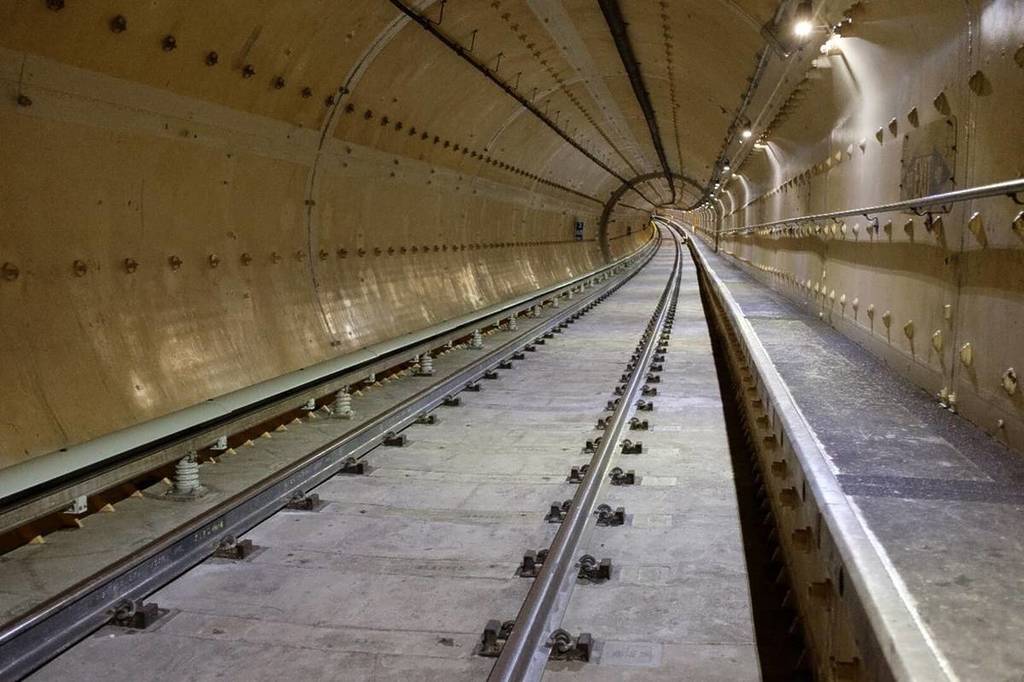
For over half a century, Bay Area commuters have depended on BART’s Transbay Tube to travel between Oakland and San Francisco. The 3.6-mile-long submerged tunnel rests at the bottom of the San Francisco Bay, with trains shuttling 28,000 people every hour across the bay floor.
The Transbay Tube first opened on September 16th, 1974, after a complex construction process. At the time, it was the longest and deepest immersed transit tunnel in the world. In honor of its 51st anniversary, we’ve taken a closer look at the Transbay Tube to see what makes this engineering marvel so remarkable.
Why is the Transbay Tube so loud?
Many BART trains are notoriously loud, but the Transbay Tube is easily the noisiest part of the BART system. When BART trains’ steel wheels travel at high speeds over corrugated rails, especially on curves, it creates the high-pitched screeching noise that we know all too well.
The Transbay Tube is about 48 feet wide with two interior tunnels for trains traveling in both directions. Its concrete enclosure amplifies the screeching sound that occurs due to the tracks’ curved shape.
That said, BART reported a reduction in noise after grinding down the rails and replacing parts of the track in 2015.
How fast do BART trains go in the Transbay Tube?
BART trains usually operate at about 70 miles per hour (113 km/h), although they can reach speeds of up to 80. BART sends 24 trains through the tube every single hour, transporting 230,000 passengers every single day.
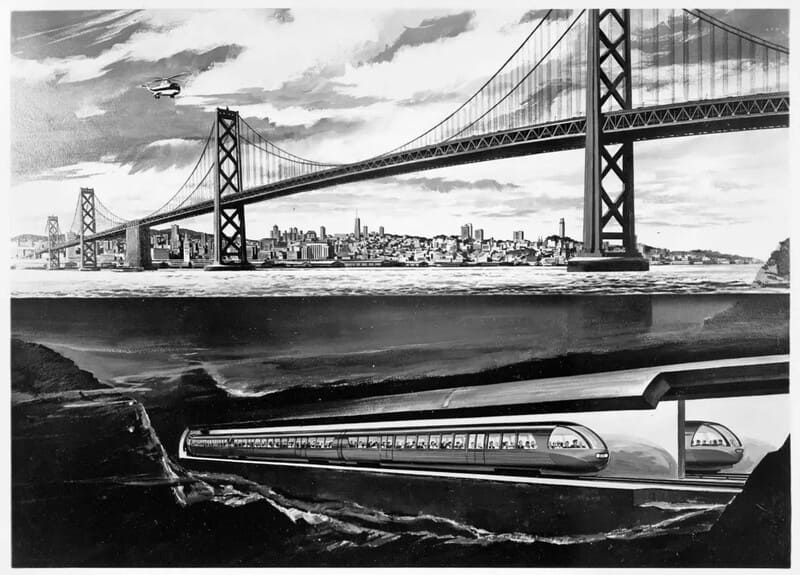
BART built the Transbay Tube to help mitigate traffic on the Bay Bridge—and if you’re traveling at rush hour, you’re certainly saving yourself some time. While traveling through the tube only takes about 10 minutes on BART, crossing the Bay Bridge by car can easily take 30-60 minutes depending on traffic.