
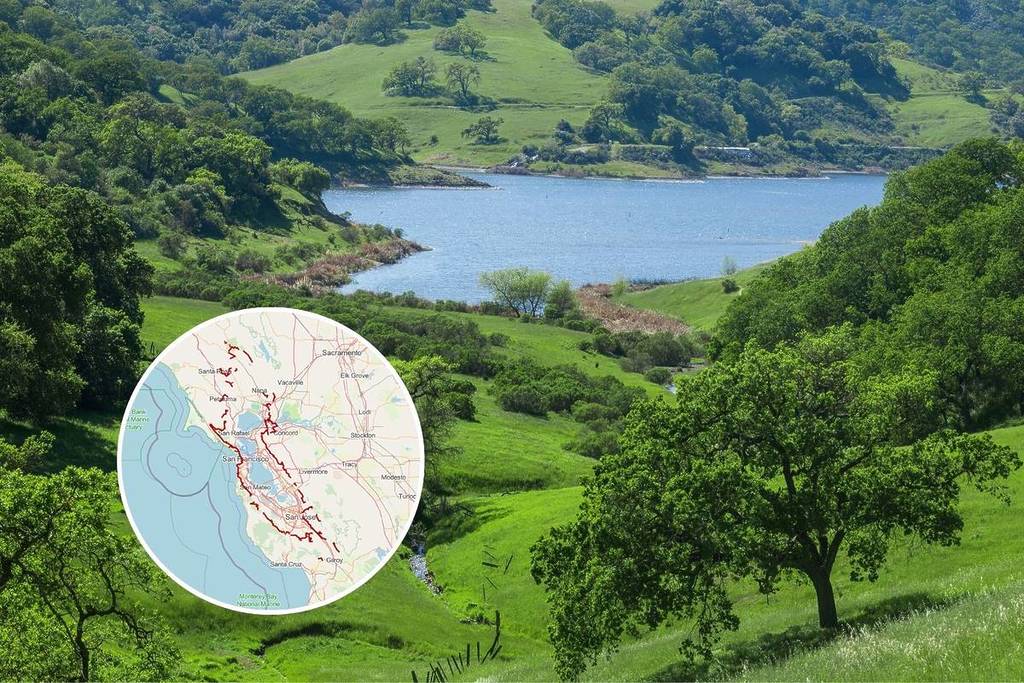

National Geographic’s latest book, 100 Hikes of a Lifetime U.S.A. by Stephanie Pearson, highlights some of the most breathtaking, must-do trails across the country.
Fortunately for Bay Area residents, one of those featured routes is our very own Bay Area Ridge Trail: an ambitious, still-in-progress 400-mile loop that traces the region’s ridgelines and runs directly through San Francisco.
Today, the Bay Area Ridge Trail is roughly 70% finished, with new segments being added gradually over time. One of the newest sections to be added was the 14.1-mile trail route through Rancho Cañada del Oro Open Space Preserve & Calero County Park, which is about 1 hour from SF by car.
Rancho Cañada del Oro Open Space Preserve & Calero County Park
The newest section, dedicated a year ago on May 30th, 2025, is one of the largest additions to the Bay Area Ridge Trail network to date. The segment traverses Rancho Cañada del Oro Open Space Preserve and Calero County Park, offering sweeping views of both the Diablo Range and the Santa Cruz Mountains.
This section represents about 40% of a larger 31-mile reroute planned between Mount Madonna and Almaden Quicksilver County Park, bringing the trail deeper into one of the Bay Area’s more remote regions.
Earlier in May 2025, another new 2.6-mile section of the Ridge Trail opened at Coyote Lake–Harvey Bear Ranch County Park. Though relatively short, the segment adds scenic ridgeline views and strengthens future connections to nearby parks.
More about the Bay Area Ridge Trail
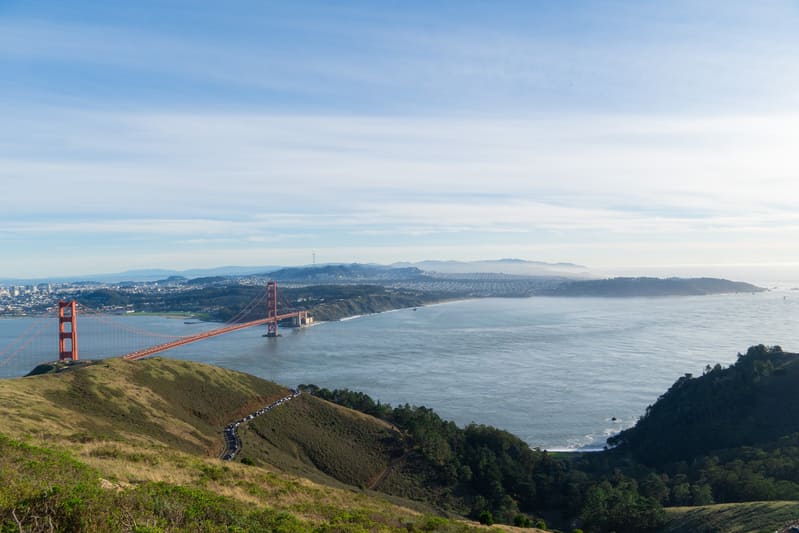
According to 100 Hikes of a Lifetime U.S.A., the vision for the full Bay Area Ridge Trail dates back to the 1960s, when William Penn Mott, Jr.—later director of the National Park Service—imagined a 550-mile path looping around the Bay Area’s ridgelines.
The first segment opened in the late 1980s, and now, nearly four decades on, about 400 miles are accessible, putting the trail at roughly 70% completion. Finishing the remaining portions could take another 20 years; the next addition is the Southern Skyline Ridge Trail, a 5.4-mile stretch expected to debut by the end of 2026.
Pearson characterizes the route as “a wild urban oasis,” spanning landscapes that range from residential areas to demanding mountain terrain.
You can check out our article for more details on the trail’s complete planned route.