
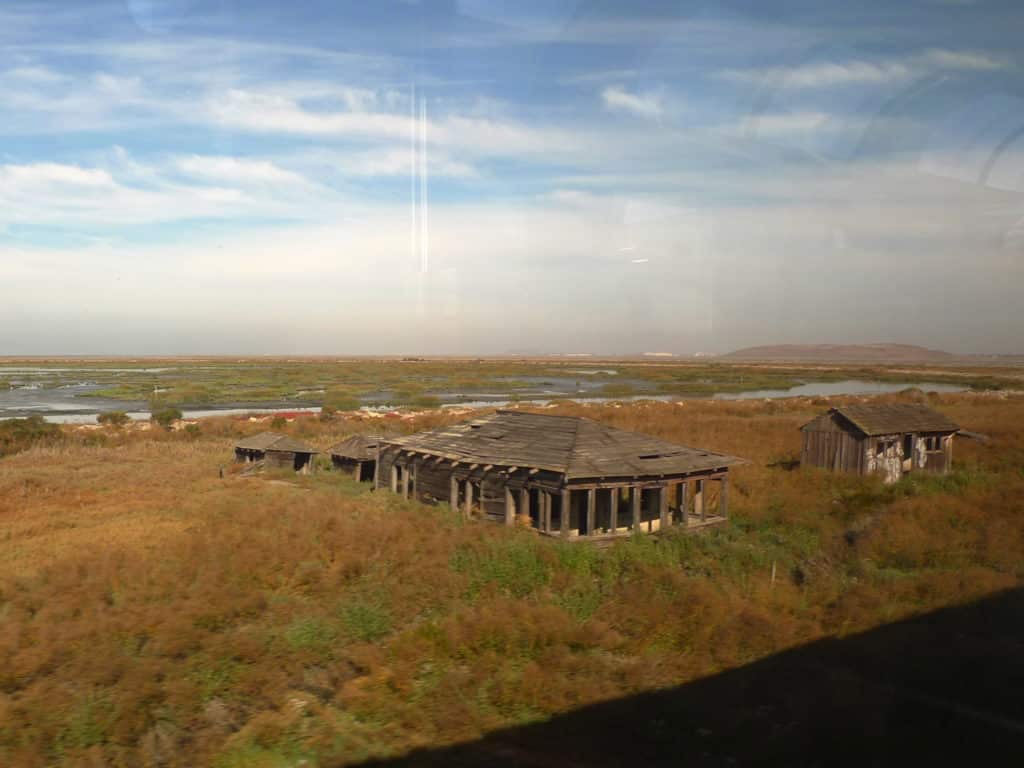


The Bay Area isn’t exactly a place you would expect to find a ghost town. While many towns in the area have grown exponentially over the years, turning into major metropolitan hubs, one small town slowly faded away. Located on a small strip of marsh just a few miles from Fremont, the town has been abandoned for over 40 years and is now sinking into the Bay.
The Bay Area’s Ghost Town


In 1876, construction on the South Pacific Coast Railroad had begun, intended to carry a mix of passengers and agricultural loads between Santa Cruz and Alameda. The railroad passed through a marshy area that saw regular barge traffic carrying fruit, vegetables, and more. To allow the barges to pass through, the railroad installed two drawbridges that were hand-operated on the newly named Station Island. In order to accommodate an operator, a single cabin was built on the small island in 1876, which would soon become a bustling—but fleeting—weekend destination
The small strip of land on the marsh saw as many as ten passenger trains a day going north and south. Initially, there was no scheduled stop at the island for passengers, but the promise of fishing and hunting drew curious visitors. Drawbridge soon became a popular weekend attraction, with up to 600 visitors in a weekend. By 1906, the small town had 79 cabins and two hotels for weekend visitors from other parts of the Bay. The number of cabins grew to 90 by 1926, and in 1931, the town officially had electricity.
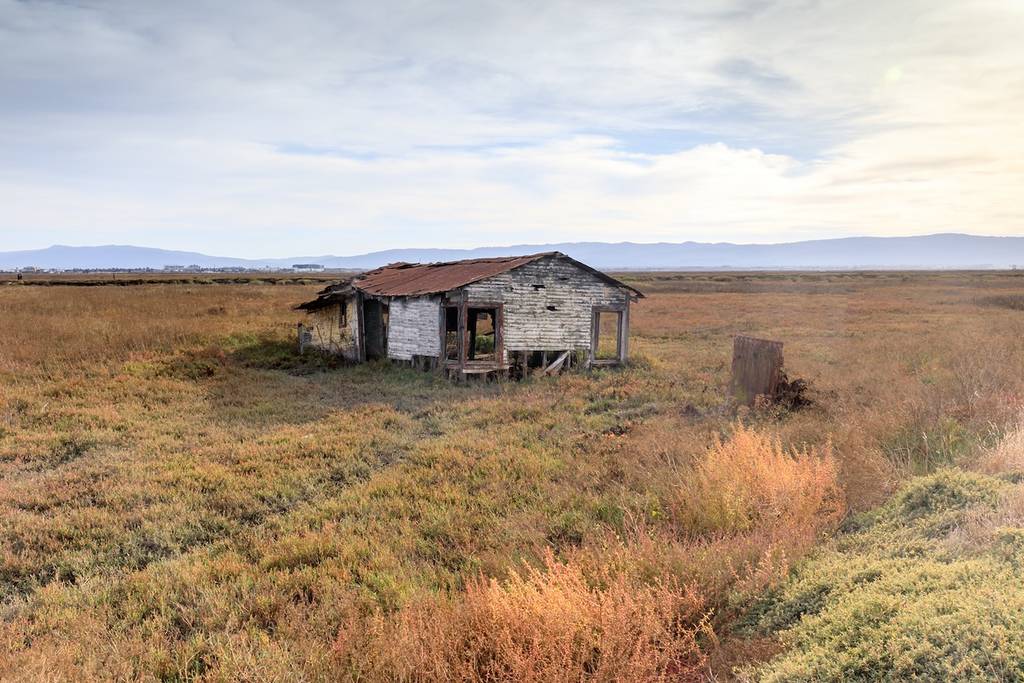
Even at its peak, Drawbridge was never your typical town. Cabins were built on stilts above the marsh with wooden walkways, and instead of a main street, the railroad tracks ran through the town. Drawbridge attracted hunters and nature lovers because of its unique location. The town had two neighborhoods, divided into north and south. The north side was populated mainly by seasonal visitors, while the south was home to more permanent residents.
Unfortunately, Drawbridge’s liveliness was short-lived. In 1936, salt ponds and sewage dumping damaged the area’s environment, making it less habitable and appealing for visitors. By 1963, fewer than five residents remained. In 1972, the San Francisco Bay National Wildlife Refuge received thousands of acres of land in the area, including the soon-to-be-abandoned town. Finally, the last resident, Charlie Luce, officially left the town in 1976.
The town is now part of the Don Edwards San Francisco Bay National Wildlife Refuge and is not open to the public; it is both illegal and unsafe to visit. You can briefly see the town from the Altamont Commuter Express, Capitol Corridor, and Coast Starlight trains.