

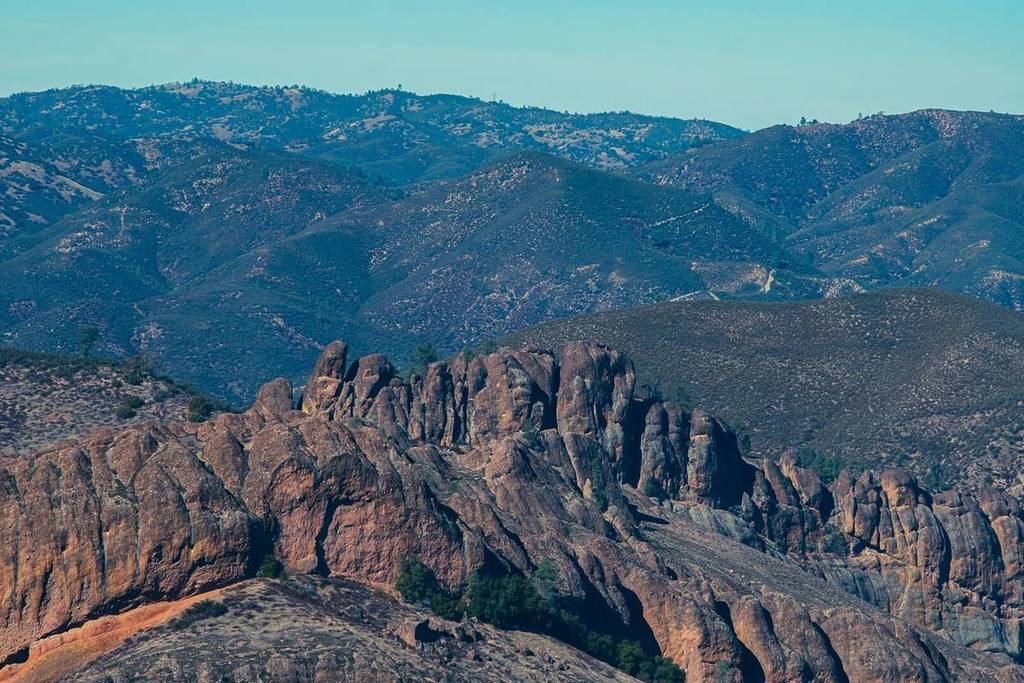
California is packed with numerous unforgettable natural wonders, but one of the most underrated spots may be Pinnacles National Park, a beautiful rocky landscape that was formed by ancient volcanoes. The park’s geography is complex and varied, with mysterious caves and towering rock walls that you can explore across over 30 miles of trails.
Pinnacles is one of the smaller and lesser-visited national parks in California, with a reported 354,076 visitors in 2024—second behind Channel Islands National Park with 262,581 visitors. With parks like Yosemite receiving upwards of 4 million visitors, these alternatives can be a welcome change during the busy season.
Keep reading to learn how to make the most of Pinnacles National Park.

Forming the Pinnacles
Several of Earth’s plates converge in California, and their movement is responsible for creating the state’s characteristic mountains, volcanoes, and valleys over millions of years. The rocky peaks at Pinnacles began forming about sixty million years ago, when the North American plate pushed over top of, or subducted, the heavier Farallon plate.
Eventually, the Farallon plate began to melt and push molten rock, or magma, up through the surface. The resulting volcanic activity ended up forming the Pinnacles, made by layers upon layers of magma oozing or erupting through the surface. Scientists estimate that this occurred between 22 and 23 million years ago.
Continuous erosion at the Pinnacles has added even more interesting facets to the park’s geography, such as steep ravines, caves, imposing rock walls, and canyons.

Things to do at Pinnacles National Park
Hiking
With over 30 miles of trails, Pinnacles is a great spot to keep going back to. You can do a strenuous hike that takes you through rocky terrain, an easy walk through the grasslands, or explore the Pinnacles’ caves. Some standout hiking trails are:
- Prewett Point Trail (0.9 miles, easy)
- Old Pinnacles Trail to Balconies Cave (5.3 miles, moderate)
- Chalone Peak Trail (9 miles, strenuous)
Climbing
Be aware that climbing at the Pinnacles is dangerous and difficult due to the weak rock. Experienced climbers hoping to explore the routes at Machete Ridge may enjoy everything from top-ropes (such as Top Rope Wall) to multi-pitch climbs (such as First Sister, Portent and Pipsqueak Pinnacle).
Camping
The Pinnacles Campground, accessible via the east side of the park, is available for reservations. RVs and tents are permitted, and each site has a picnic table and fire ring, although campfires are only permitted under certain conditions. You’ll also find water fountains, coin-operated showers, a swimming pool (open April – September), and a dump station. Tent cabins are available for rent.
Bird Watching
181 total bird species have been documented at the Pinnacles. Bring a good pair of binoculars and look out for California Condors and Turkey Vultures circling around the High Peaks. Balconies Trail is also a great place to spot Canyon Wren, towhees, and Oak Titmouse.

Visiting the Pinnacles
You can find Pinnacles National Park at 5000 Highway 146 in Paicines, California, which is about 2 hours south of San Francisco. Summers are very hot, so bring lots of water, food/snacks, and sunscreen! Also, be aware that there is no cell service in the park, and private vehicles must pay a $15-30 entrance fee.
Learn more: National Park Service