

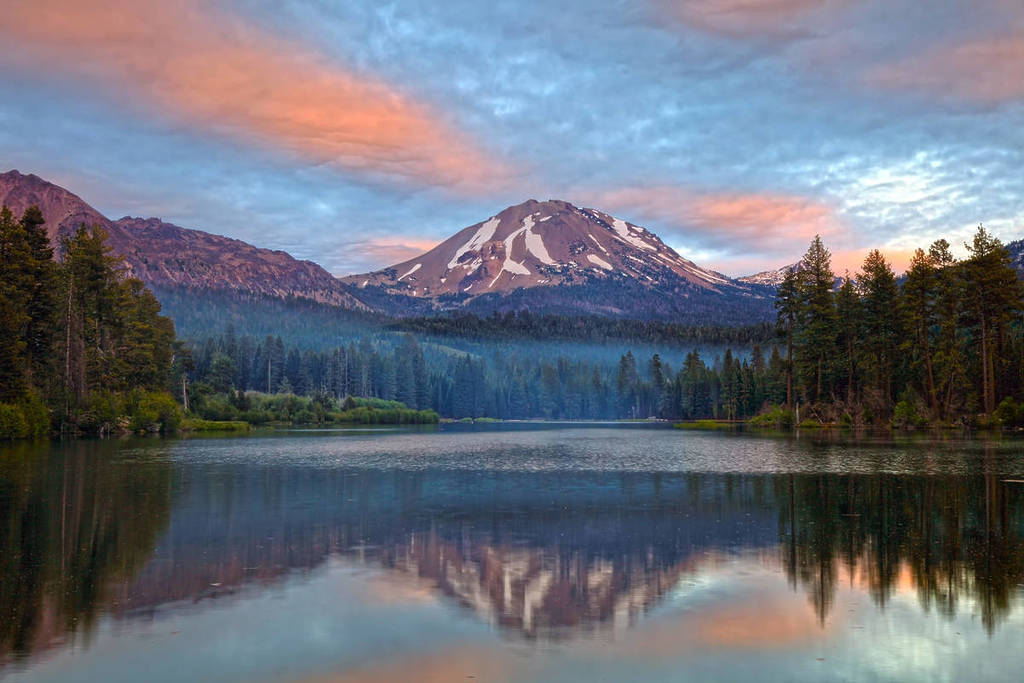
Lassen Volcanic National Park is one of the most geologically unique and visually striking national parks in California, renowned for its fascinating hydrothermal features and dramatic volcanic landscapes.
The park’s compelling natural phenomena are even more enjoyable thanks to its comparatively sparse crowds, making for quite the welcome treat each summer.
While Yosemite receives over 4 million visitors annually and manages summer entry with a reservation system, Lassen sees about 500,000, offering a significantly less crowded experience.
Here’s what to know about Lassen’s epic geology and unique activities before you plan your road trip.
History and geology of Lassen Volcanic National Park
The park covers about 166 square miles and is surrounded by Lassen National Forest, nestled at the intersection of the Cascades, Sierra Nevada, and Great Basin.
Native American groups, including the Atsugewi, Yana, Yahi, and Maidu peoples, lived in this region for thousands of years. European-American settlers arrived in the 19th century, and the park is named after Danish-American pioneer Peter Lassen.
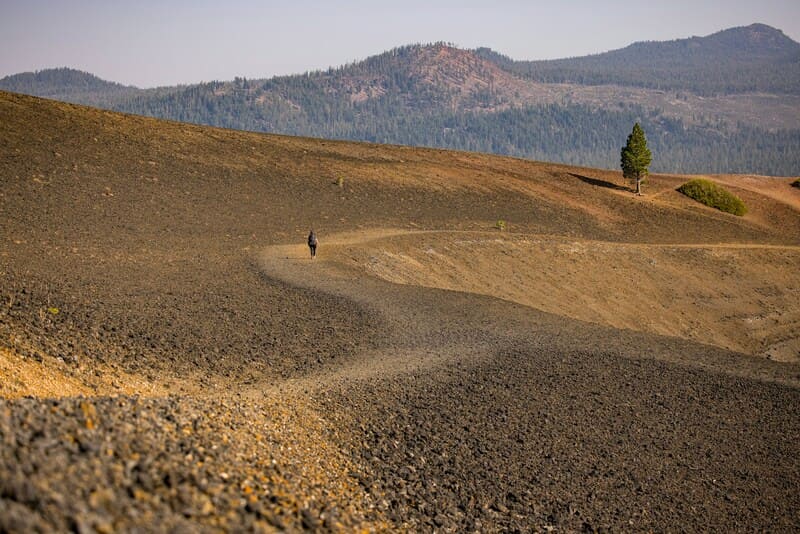
Lassen’s varied landscapes have been shaped by ongoing volcanic activity over millennia, and you can see geologic processes before your eyes. This is one of the few places on earth where you can find all four major types of volcanoes: plug dome (lava dome), shield, cinder cone, and composite (stratovolcano). Lassen Peak is the most prominent one, and at 10,457 feet tall, it’s the largest lava dome volcano in the world.

In the summer and fall, Lassen opens its hiking trails to Bumpass Hell, a 16-acre hydrothermal area filled with boiling springs, mud pots, and hissing fumaroles. The enthralling Martian-like landscape just about makes up for its terrible rotten egg smell.
Lassen Peak last erupted between 1914 and 1921, with the most significant eruption occurring in 1915. The volcano is still active, and although no one can say when the next eruption will occur, the USGS (United States Geological Survey) monitors all of the park’s volcanoes and issues alerts if needed.
Things to do in Lassen Volcanic National Park
Activities and available landmarks at Lassen vary by season. In the winter and spring, visitors come to ski and snowshoe throughout the park’s 30 feet of annual snowfall. But fall and summer support warm-weather activities like hiking and fishing, and reveal geothermal elements that would otherwise be buried by snow.
- Bumpass Hell – This is Lassen’s famous 16-acre hydrothermal area, which opens in the summer and fall. Another hydrothermal area, Sulphur Works, is more easily accessible on the roadside.
- Lassen Peak – Many park visitors rise to the challenge of summiting Lassen Peak, a difficult hike with fantastic panoramic views.
- Manzanita Lake – A popular lake for kayaking, fishing, and swimming, famous for the iconic view of Lassen Peak reflected in the water. Alternatives include Lake Helen, Boiling Springs Lake, and Summit Lake.
- Kings Creek Falls – Reach one of the park’s most beautiful waterfalls via an accessible and beautiful hike through meadows and forest.
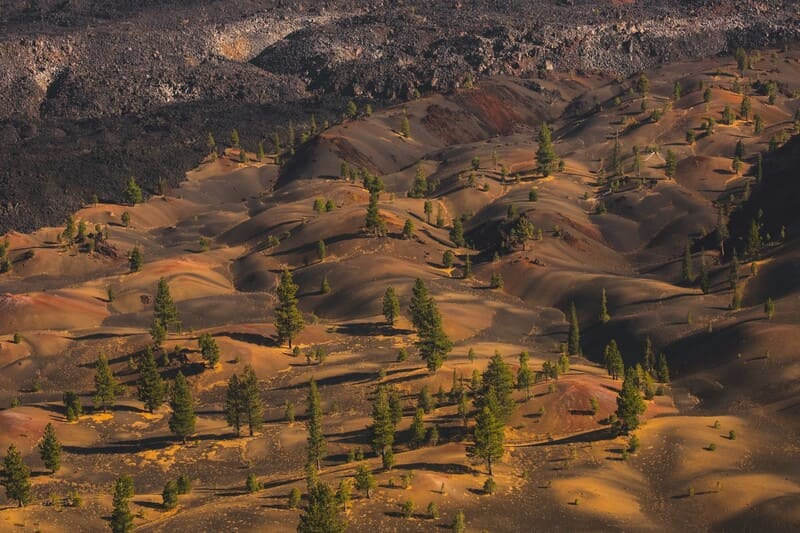
- Cinder Cone and Painted Dunes – The strenuous Cinder Cone trail takes you up a cinder cone volcano with beautiful views of the colorful Painted Dunes.
- Kohm Yah-Mah-nee Visitor Center – Lassen’s main visitor center has interactive exhibits and helpful staff to point you in the right direction.

Visiting Lassen from SF
Unlike Yosemite, there is no reservation required for general entry to Lassen Volcanic National Park. You will need reservations for most campgrounds and a wilderness permit for backcountry camping.
The main park highway is usually fully open by late June and early July, and the popular Bumpass Hell Trail usually opens in mid-July, although there’s still no estimated opening date for 2025.
You can reach Lassen Volcanic National Park in about four hours by car from San Francisco, although you’ll want to make some stops along the way—some destinations include Napa Valley, Old Sacramento, and Redding with its famous Sundial Bridge. Once you’re there, Lassen isn’t far from some other fantastic nature destinations, including Burney Falls, the Subway Cave Lava Tubes, and McWay Falls.
🌐 Learn more: National Park Service – Lassen Volcanic National Park