
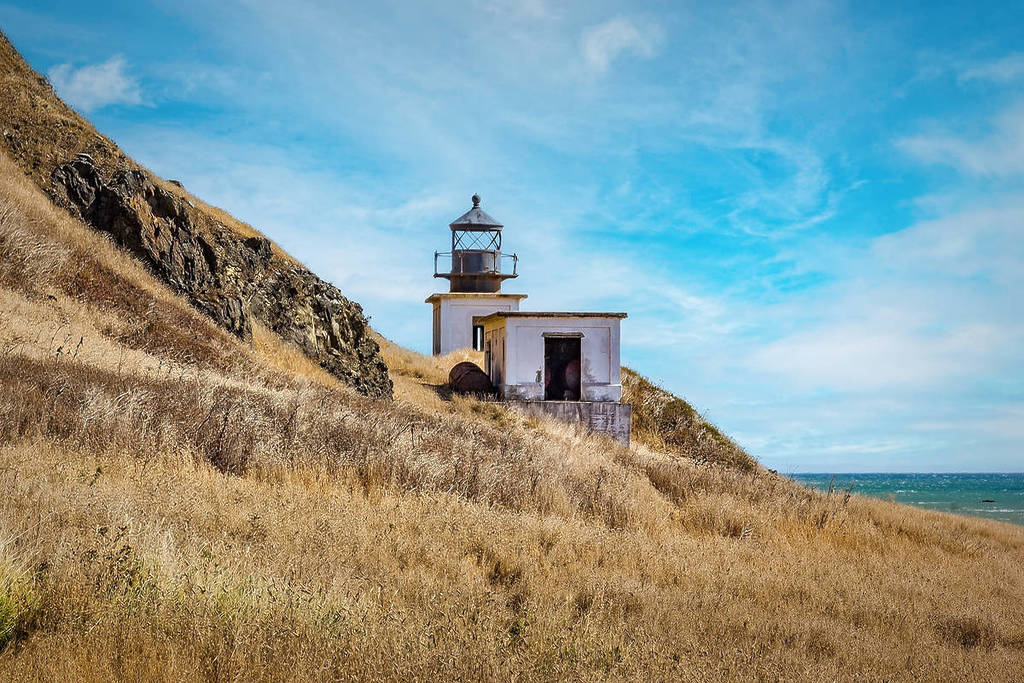

The Punta Gorda Lighthouse is one of the most recognizable sights along California’s remote Lost Coast. Built in 1912, it remains one of the few traces of human presence on an otherwise undeveloped 75-mile stretch of shoreline between Rockport and Ferndale.
This rugged coastline is notoriously difficult to access, making it a destination mainly for seasoned hikers wanting to take on the demanding 25-mile Lost Coast Trail.
Located a few miles south of Mattole Beach within the King Range National Conservation Area, the lighthouse earned the nickname “The Alcatraz of Lighthouses” because of its remote location and difficult access.
History of Punta Gorda Lighthouse
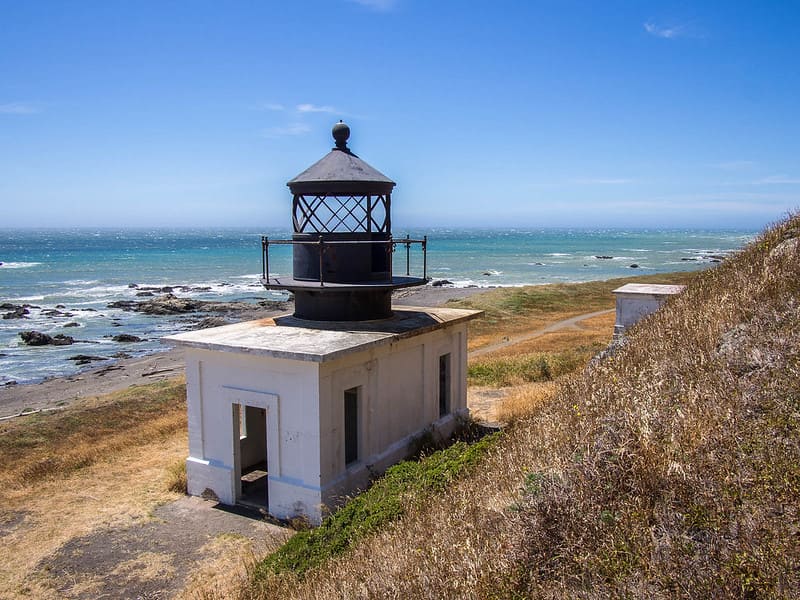
Before European settlement, the Lost Coast was home to Indigenous groups including the Sinkyone, Mattole, and Wiyot peoples. Settlers eventually established nearby communities such as Ferndale and Shelter Cove in the 19th century. Despite the harsh terrain limiting large-scale development, the United States Lighthouse Service managed to construct the Punta Gorda Lighthouse in 1911.
The lighthouse operated with its Fresnel lens until after World War II, when maintaining such a remote site became impractical. It was decommissioned in 1951 and replaced by an offshore lighted buoy, while the surrounding buildings, including the keeper’s quarters, were demolished.
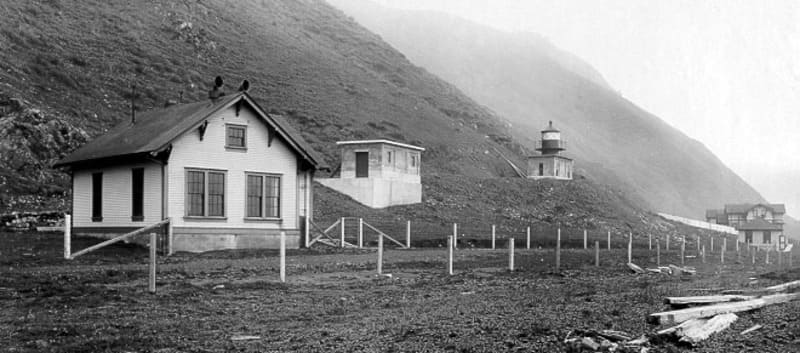
Today, the remaining concrete tower and oil house still stand, earning a place on the National Register of Historic Places in 1976. The original Fresnel lens and flagpole are on display at the Humboldt Bay Maritime Museum.
Visiting the Lost Coast
Most people encounter the lighthouse while hiking the Lost Coast Trail, though you can also reach the Mattole Beach Trailhead by car.
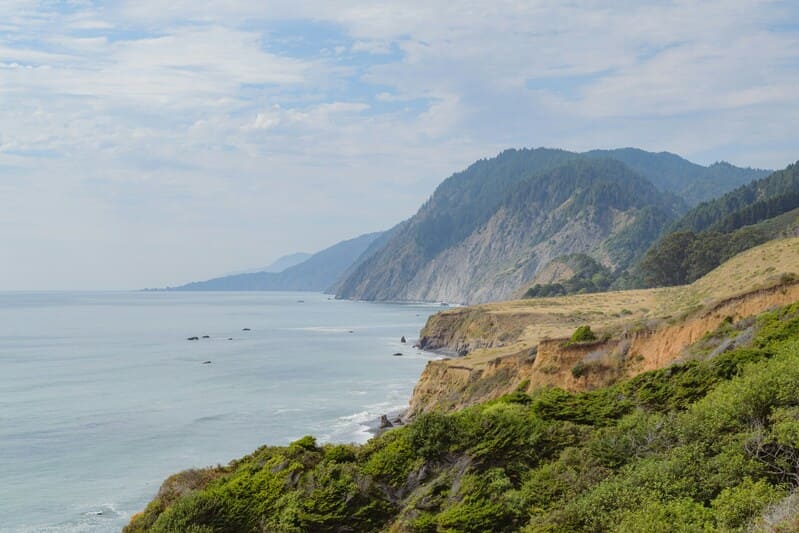
The area attracts experienced hikers eager to explore one of California’s most untouched landscapes, featuring black sand beaches, dense coastal forests including the candelabra redwoods, and a challenging route that requires a permit.
🌐 Learn more: Bureau of Land Management