

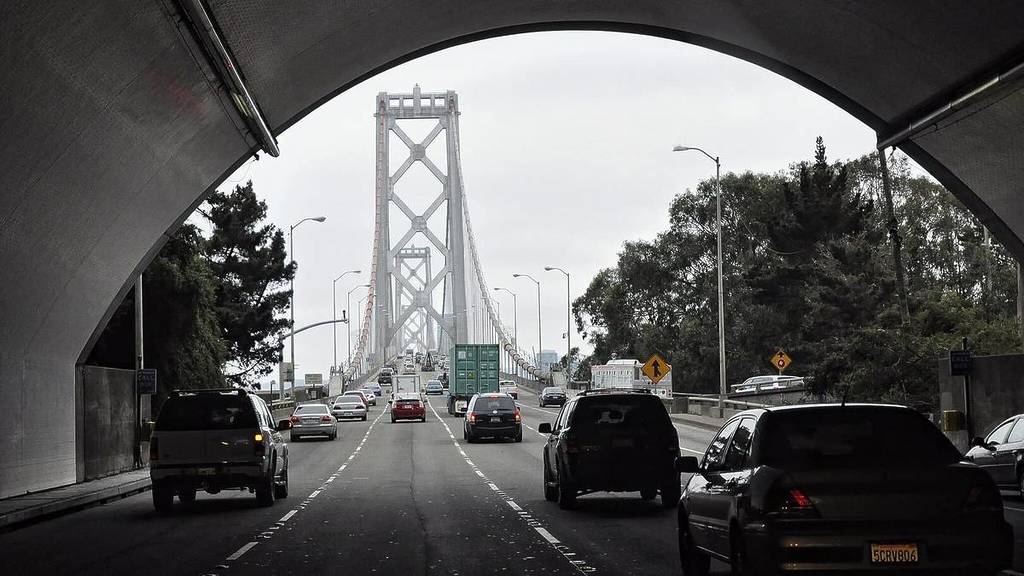
About 260,000 vehicles pass through the Yerba Buena Tunnel every single day, but most drivers don’t know that they’re traversing a world-renowned engineering marvel.
When the tunnel opened with the rest of the Bay Bridge in 1936, it was celebrated as the largest single-bore road tunnel in the world by diameter.
The world’s largest single-bore tunnel
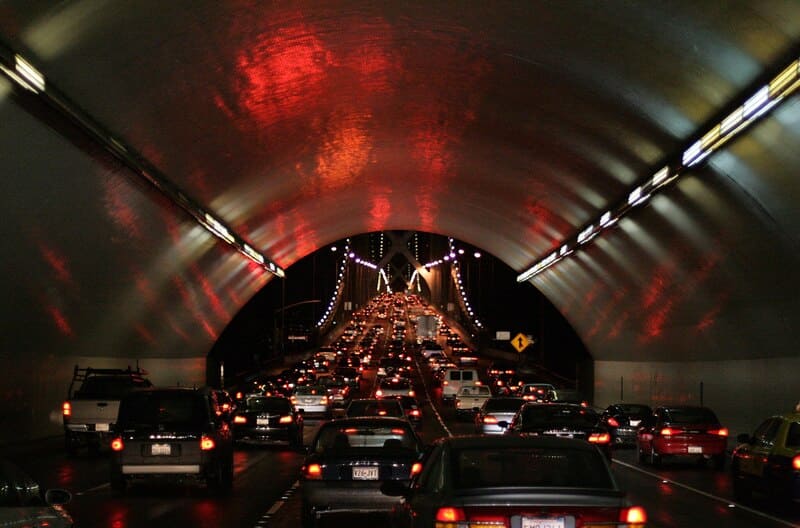
Yerba Buena Tunnel sits about halfway across the San Francisco-Oakland Bay Bridge, boring straight through Yerba Buena Island with two decks of traffic.
Yerba Buena Island hosted the main groundbreaking ceremony for the Bay Bridge project in 1933, when President Franklin D. Roosevelt triggered a remote dynamite blast. The Bay Bridge’s chief engineer Charles H. Purcell and his team spent the next several years stabilizing and removing rock to create the enormous arched-shaped bore.
The bore measures about 76 feet wide and 58 feet high overall, with an interior height of 66 feet and width of 53 feet.
When the bridge opened, both of its levels carried two-way traffic, with cars designated to the upper deck, and buses, trucks, and later rail lines on the lower deck. The Bay Bridge’s rail service ended in 1958, and its current one-way-per-deck design was adopted in the 1960s.
Not long after, the city began constructing BART’s underwater Transbay Tube to mitigate traffic on the bridge. At the time, the Transbay Tube was the world’s longest underwater transit tunnel and the largest and deepest immersed tube.
Driving through Yerba Buena Tunnel today
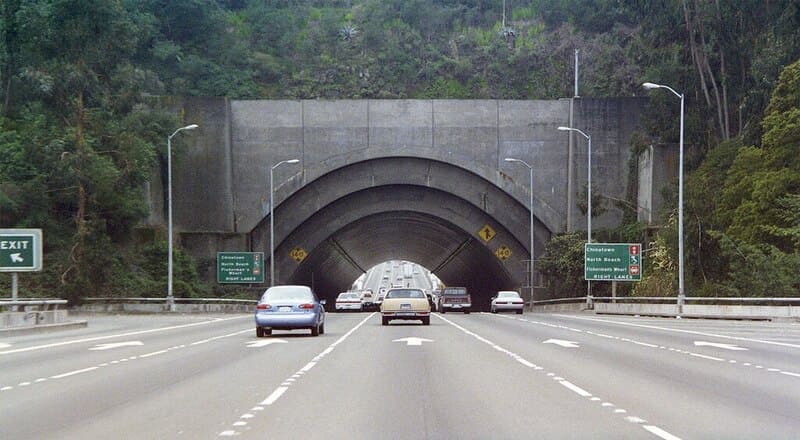
If you’re accustomed to driving across the Bay Bridge, you’ll know that westbound traffic toward San Francisco uses the upper deck and eastbound traffic toward Oakland uses the lower deck.
Inside the tunnel, drivers cross the 540-foot stretch lit by LED lighting. Eastbound drivers on the lower deck can still see the “deadman holes” installed in the south wall for worker safety nearly 90 years ago. Westbound drivers can still see the original 1930s tiling on the ceiling.