

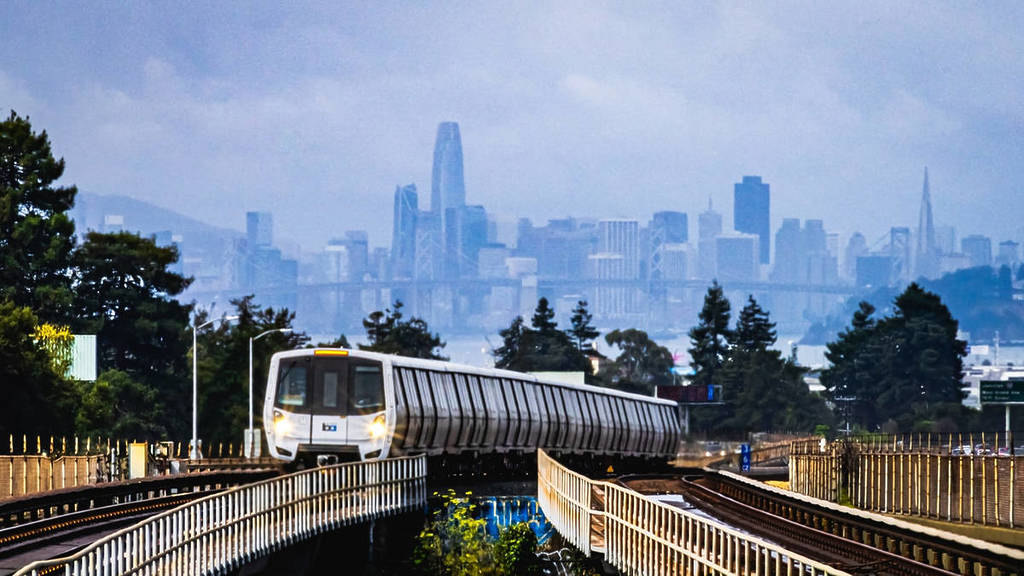
BART’s ‘Fleet of the Future’ involves a system-wide replacement of its 1970s rail cars with a new, modern fleet. The replacement began in 2018, and in July of 2025, BART received its 1,000th Fleet of the Future car from the manufacturer.
Now, in 2026, BART is on track to receive its final 1,129th car, bringing the Fleet of the Future project to completion.
Here’s a closer look at BART’s Fleet of the Future…
Fleet of the Future car upgrades
If you’re a consistent BART rider, there’s no doubt you’ve been enjoying the new Fleet of the Future cars for a while now. The second-generation cars are designed to reduce noise, relieve crowding, and improve accessibility for everyone. With lightweight aluminum bodies and better HVAC, the trains are designed with sustainability and passenger comfort as priorities.
The new trains feature digital signs on the front and side which clearly indicate the train’s final destination, and there’s a new screen on the inside of the cars with a moving “You Are Here” bubble and real-time system map.
The cars also have 50% more doors for ease of boarding and exiting, upgraded wheelchair areas, tactile bars for blind or low-vision riders, and a hearing loop system for riders with hearing aids. Not to mention clearly-marked priority seats and strategically-placed poles and overhead straps to help you hold on.
From 669 cars to 1,129
BART’s original fleet of cars from the 1970s was retired in 2024, with thousands of riders showing up at a celebration to ride the cars one last time.
The legacy fleet only had about 669 cars in service, and BART’s original Fleet of the Future contract comprised 775 cars, making for a noticeable increase in capacity and train frequency.
The Transbay Corridor Core Capacity Program calls for another 354 cars, bringing the total up to 1,129 in 2026. Many of the new cars have yet to enter service, and will be implemented as BART continues its Phase II project to Silicon Valley.
According to a press release, BART’s Fleet of the Future project has also come in nearly $400 million under budget, thanks to car manufacturer Alstom ramping up its delivery schedule and BART doing most of the engineering in-house.
“There’s no question the Fleet of the Future project is a success story,” said Project Manager John Garnham.