
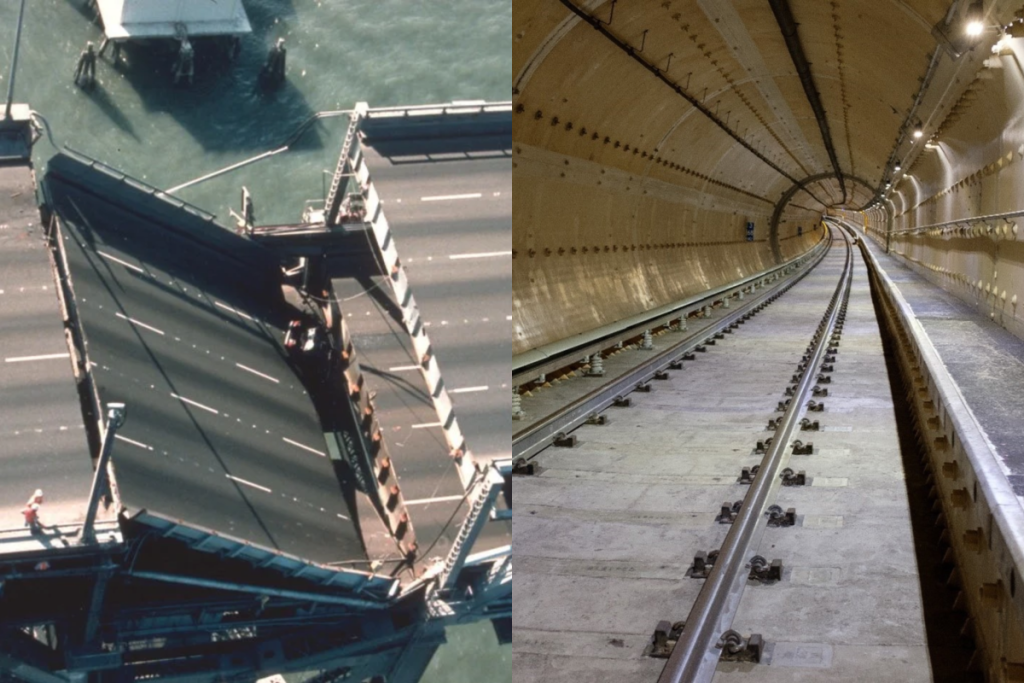

Exactly 37 years ago on October 17, 1989, the Loma Prieta earthquake struck the Central Coast of California. Among other damage throughout the Bay Area and Santa Cruz, the quake memorably collapsed an entire 50-foot section of the Bay Bridge’s upper deck. The bridge stayed closed for an entire month as a result, with Caltrans eventually reopening it on November 18.
The closure had a major effect on the Bay’s public transit infrastructure at the time, resulting in an improvised new ferry service and 24-hour service through BART’s Transbay Tube.
Here’s a closer look.
The tunnel that carried the Bay
BART’s Transbay Tube first opened in September of 1974, earning recognition at the time as the world’s longest underwater transit tunnel and the world’s largest and deepest immersed tube. The 3.6-mile tube reaches a maximum depth of 135 feet and carries 24 trains per hour between San Francisco and Oakland.

Before Loma Prieta, the Bay Bridge served more than 200,000 vehicles every day. But during the closure, the Transbay Tube became the main way to cross the water, which BART describes as its “finest hour.” After an inspection of the tube and trains, the agency ran 24-hour service from the day of the quake until December 3, logging 357,135 trips.
Frank Wilson, BART’s General Manager at the time, said of agency staff: “Not only did they get BART back on track, they kept it there for more than a month while the Bay Bridge was out of service, carrying more than 10 million passengers to their jobs and homes around the clock.”
BART’s services, along with the improvised ferry service put together by harbor-cruise captains, showed how much the region relied on options besides the Bay Bridge.
BART earthquake preparedness today
In the case of a major earthquake, the Transbay Tube allows for 6 degrees of movement, a design which allowed the tube to absorb the shock during Loma Prieta. Additional seismic retrofits in 2024 added a new steel liner in critical sections and new water pumping systems.
These days, BART’s Earthquake Safety Program is as robust as ever, featuring the USGS-connected ShakeAlert early warning system and carefully planned protocols. Read our article about the recent ShakeOut event to learn more.